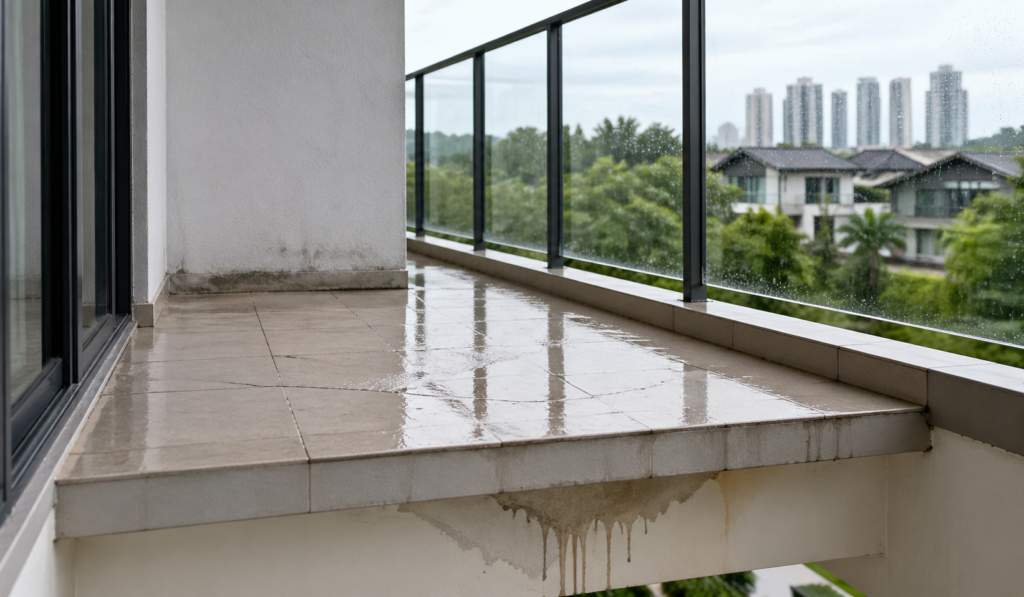
Balcony leakage can start with a small damp patch, loose grout, or water stain on the ceiling below. In Singapore, where heavy rain, humidity, and monsoon weather are part of daily life, a balcony leak can quickly become a serious waterproofing problem. This Balcony Leakage Guide Singapore explains what causes balcony water seepage, how to spot early warning signs, and when to call a professional waterproofing contractor Singapore homeowners can rely on.
For HDB flats, condos, landed houses, penthouse balconies, and MCST-managed buildings, early inspection is the safest way to prevent more serious structural damage and costly repair work.
Balcony leakage happens when rainwater or washing water penetrates through the balcony floor, wall joints, tile gaps, cracks, or a failed waterproofing membrane. Instead of draining properly, water slowly seeps into the concrete slab, wall, or ceiling below.
In many Singapore homes, balcony leakage is not always visible immediately. The balcony surface may look normal, but the unit below may start seeing ceiling stains, peeling paint, mould marks, or damp patches. This is why balcony leakage cases in Singapore often require proper diagnosis before repair work begins.
A balcony is exposed to constant rain, sunlight, cleaning water, and temperature changes. Over time, the waterproofing layer below the tiles may weaken, especially if the balcony was poorly installed, renovated without proper waterproofing, or affected by drainage problems.
Balcony leakage rarely occurs due to a single issue. In most cases, several defects work together until water finds a path through the structure.
The waterproofing membrane is the hidden protective layer beneath the balcony tiles or screed. Once it cracks, debonds, or wears out, water can pass into the slab. A failed waterproofing membrane is one of the most common reasons for balcony floor leakage in Singapore homes.
Cracked tiles allow water to enter below the surface. Even small hairline cracks can become a problem during heavy rain, especially on open balconies, landed terraces, and penthouse balconies exposed to direct weather.
A balcony drainage problem can cause water to sit on the floor instead of flowing toward the outlet. Ponding water increases pressure on tile joints, grout lines, wall corners, and waterproofing layers. If the water remains for hours after rain, leakage risk becomes much higher.
Tile grout is not a full waterproofing system. When grout becomes loose, powdery, cracked, or missing, water can enter through the gaps. Many homeowners only notice this after seeing dampness below the balcony.
The joint where the balcony floor meets the wall is a high-risk leakage point. Movement, poor sealing, or age can create small gaps. This often leads to balcony wall seepage, stains near skirting areas, or water marks inside the room beside the balcony.
Singapore’s tropical climate places balconies under constant stress. Sudden downpours, monsoon rain, high humidity, and strong sunlight can expand and contract building materials. Over time, weak areas open up and allow water seepage.
Some balcony leakage starts after renovation. If tiles are overlaid without checking the existing waterproofing condition, water may become trapped between layers. This can make the problem harder to detect and repair later.
Balcony leakage usually gives early warning signs before serious damage appears. Homeowners should not ignore these symptoms:
For condos and MCST-managed buildings, these signs should be reported early because balcony leakage may affect more than one unit. A small leak from an upper balcony can become a dispute if inspection and repair are delayed.
Yes, some balcony leakage can be repaired without hacking, but it depends on the condition of the existing tiles, waterproofing layer, drainage, and concrete slab.
No-hacking balcony waterproofing may be suitable when:
In these cases, a waterproofing contractor may use surface sealing, joint treatment, grout repair, or clear waterproof coating systems to reduce water penetration.
However, hacking may be required when:
A proper inspection is important because applying a surface coating over a serious hidden defect may only give temporary relief. For long-term balcony leak repair, the root cause must be identified first.
The right balcony waterproofing Singapore method depends on the leak source, floor condition, and building type. A landed house balcony may need a different solution from a condo balcony or HDB service balcony.
A professional inspection checks the floor, wall joints, drainage outlet, tile condition, grout lines, railing base, and ceiling below. The goal is to confirm where water is entering and how far the seepage has spread.
If the problem comes from cracked grout or weak joints, damaged areas may be cleaned and resealed. Flexible sealants are often used at wall-floor joints because these areas experience movement.
For suitable cases, a waterproof coating may be applied over the balcony surface. This can help protect against rainwater penetration without hacking. The surface must be cleaned, prepared, and dry enough before coating.
PU injection waterproofing may be used for certain cracks, joints, or seepage points where water is entering through concrete. It helps seal water paths from within, especially when leakage appears in the ceiling or wall below.
For serious balcony floor leakage, tiles may need to be hacked and removed. The old waterproofing layer is then replaced with a proper membrane system before screed and tile reinstatement. This is usually the stronger option for long-term repair when the original membrane has failed.
If the balcony has ponding water, repair may include improving the slope, clearing blocked outlets, or correcting drainage defects. Waterproofing alone may not solve the problem if water continues to collect after every rain.
Balcony leakage may look minor at first, but water damage spreads quietly. Once moisture enters the concrete slab, it can affect paint, plaster, electrical points, ceiling boards, and internal wall finishes.
Ignoring balcony water seepage can lead to:
For landed houses, leakage from an upper balcony or terrace can damage rooms below. For condos, balcony leakage may involve neighbors, managing agents, and MCST checks of responsibility. Acting early helps protect both the property and the relationship with surrounding units.
The NexTech Waterproofing provides waterproofing and leak repair services for homes and properties in Singapore. The team handles balcony waterproofing, roof waterproofing, wall seepage repair, ceiling leak repair, PU injection waterproofing, toilet waterproofing, and emergency leak repair.
Homeowners choose a professional waterproofing contractor Singapore residents can trust because leakage repair is not just about covering stains. It requires proper checking, surface preparation, and the right method for the actual water path.
For balcony leakage cases, MM Engineering Works Pte Ltd focuses on:
Whether the issue is balcony wall seepage, balcony floor leakage, or a ceiling leak from balcony water penetration, proper diagnosis is the first step.
Balcony leakage should be checked before it becomes a larger ceiling, wall, or flooring problem. If you notice damp patches, cracked grout, ponding water, or water stains below your balcony, arrange an inspection early.
Contact NexTech Waterproofing for professional balcony leakage inspection and waterproofing advice in Singapore. Get the problem checked before the next heavy rain or monsoon season, and protect your home from deeper water damage.

Nextechwaterproofing
WhatsApp us